
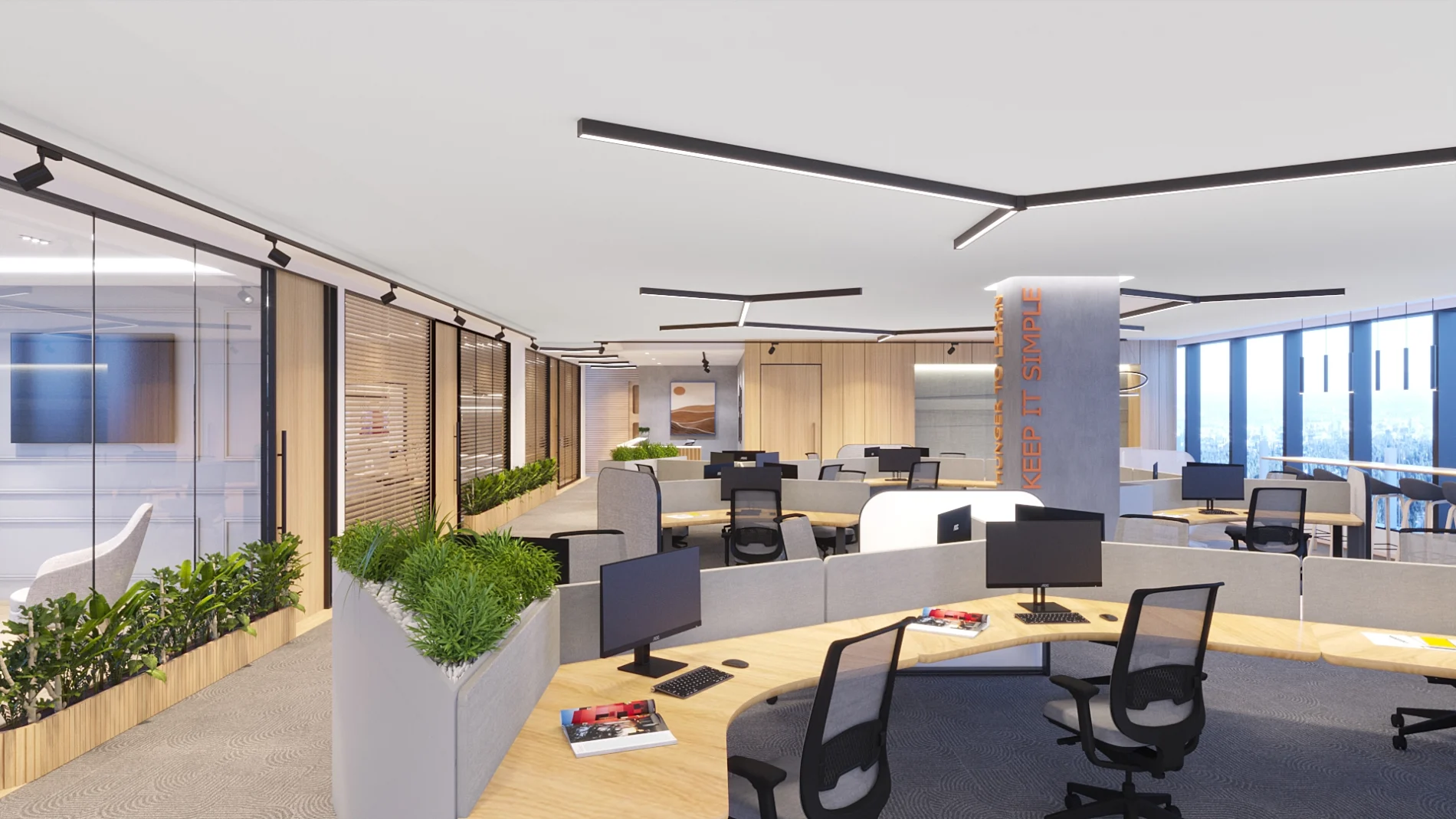
In today’s fast-evolving work environment, businesses are placing greater emphasis on office design that enhances both productivity and employee wellbeing. One of the most crucial elements in achieving this balance is the office workstation layout. Innovative office workstation designs not only improve workflow efficiency but also create a comfortable and engaging environment for employees. Whether for corporate offices, co-working spaces, or home offices, adopting the right layout can significantly impact performance and satisfaction.
The Importance of Thoughtful Workstation Layouts
A well-planned office workstation layout goes beyond aesthetics. It directly influences how employees interact, collaborate, and focus on tasks. Poorly arranged workstations can lead to distractions, discomfort, and reduced productivity. On the other hand, an intelligently designed layout promotes seamless communication, better posture, and improved concentration.
Modern businesses in Malaysia are increasingly recognising that employee comfort and productivity are interconnected. As a result, companies are investing in ergonomic furniture and flexible layouts that cater to diverse work styles.
Open Plan Layouts: Encouraging Collaboration
Open plan office layouts remain a popular choice for organisations aiming to foster teamwork and communication. By removing physical barriers such as cubicles, employees can easily exchange ideas and collaborate on projects.
However, to make open layouts effective, it is essential to incorporate designated quiet zones or focus areas. Without these, noise levels can become disruptive. Combining open spaces with acoustic panels, soft furnishings, and strategic zoning ensures a balanced environment that supports both collaboration and individual work.
Activity-Based Workstations: Flexibility at Its Best
Activity-based working (ABW) is an innovative approach that allows employees to choose workspaces based on their tasks. Instead of fixed desks, offices are divided into different zones such as:
- Focus areas for deep work
- Collaboration zones for team discussions
- Relaxation spaces for breaks
- Meeting rooms for formal interactions
This layout empowers employees to move freely and select the most suitable environment for their activities. It enhances productivity by reducing monotony and providing flexibility, which is particularly beneficial in dynamic work settings.
Ergonomic Workstations: Prioritising Employee Wellbeing
Ergonomics plays a vital role in designing comfortable and efficient workstations. Poor posture and inadequate furniture can lead to long-term health issues such as back pain and repetitive strain injuries.
Innovative workstation layouts incorporate ergonomic solutions such as height-adjustable desks, supportive chairs, and proper monitor positioning. These features allow employees to customise their workstations according to their preferences, reducing physical strain and boosting overall productivity.
In Malaysia’s corporate landscape, ergonomic office furniture is becoming a standard rather than a luxury, reflecting a growing awareness of workplace health.
Modular Workstation Designs: Adaptability for Growth
Modular office workstations offer unmatched flexibility, making them ideal for businesses that anticipate growth or frequent changes. These systems can be easily reconfigured to accommodate new employees, departments, or workflows.
Key benefits of modular layouts include:
- Efficient use of office space
- Cost-effective scalability
- Easy maintenance and upgrades
- Customisable configurations
By investing in modular designs, companies can future-proof their office spaces while maintaining a cohesive and organised layout.
Hybrid Workstation Layouts: Supporting Modern Work Trends
With the rise of hybrid working models, office layouts must cater to both in-office and remote employees. Hybrid workstation designs integrate shared desks, hot-desking systems, and technology-enabled spaces to support flexible work arrangements.
Hot-desking allows employees to use any available workstation rather than having assigned desks. This approach maximises space utilisation and is particularly useful for organisations with rotating or remote teams.
Additionally, integrating video conferencing tools and collaborative technology ensures seamless communication between on-site and remote workers.
Incorporating Biophilic Design Elements
Biophilic design is an innovative trend that brings natural elements into the workplace. Incorporating greenery, natural lighting, and organic materials into workstation layouts can significantly enhance employee wellbeing and productivity.
Studies have shown that exposure to natural elements reduces stress, improves mood, and increases focus. Simple additions such as indoor plants, green walls, and large windows can transform a standard office into a refreshing and inspiring environment.
Privacy Pods and Quiet Zones
While collaboration is essential, employees also need spaces for focused work. Privacy pods and quiet zones are becoming increasingly popular in modern office layouts. These enclosed or semi-enclosed spaces provide a distraction-free environment for tasks that require concentration.
By integrating these areas into the overall workstation layout, businesses can cater to different work styles and ensure that employees have access to both collaborative and private spaces.
Smart Technology Integration
Innovative office workstation layouts are incomplete without the integration of smart technology. From automated lighting systems to desk booking software, technology enhances efficiency and convenience in the workplace.
Features such as wireless charging stations, cable management systems, and IoT-enabled devices contribute to a clutter-free and streamlined workspace. These technological advancements not only improve productivity but also create a modern and professional office environment.
Conclusion
Innovative office workstation layouts are essential for creating a productive and comfortable workplace. By combining flexibility, ergonomics, and smart design principles, businesses can optimise their office spaces to meet the evolving needs of their workforce.
Whether through open plan designs, modular systems, or hybrid workstations, the key is to strike a balance between collaboration and privacy. Incorporating elements such as ergonomic furniture, biophilic design, and advanced technology further enhances the overall work experience.
As Malaysian businesses continue to adapt to modern work trends, investing in innovative workstation layouts is no longer optional—it is a strategic move towards improved productivity, employee satisfaction, and long-term success.